If you live on the Gold Coast and your toilet is gurgling, your shower is draining slowly, or there’s a foul smell lingering around your yard, you might be dealing with the number one enemy of local plumbing: tree roots in drain pipes.
It’s a story we see every week at Creative Coast Plumbing & Gas. You flush the toilet, and instead of everything disappearing down the line, the water level rises ominously. Or worse, raw sewage starts backing up through the floor grate in your bathroom. While a plunger might offer a temporary reprieve, the underlying issue is often much more stubborn. The lush, tropical gardens that make Gold Coast living so appealing are the exact same environments that wreak havoc on our underground plumbing infrastructure.
In this guide, we’re going to break down exactly why tree roots are so drawn to your sewer lines, which local trees are the worst offenders, and the warning signs you need to watch out for. Most importantly, we’ll compare every available fix—from chemical foaming to full pipe relining—complete with realistic cost expectations for Gold Coast homeowners. No fluff, just straight-talking advice from a local plumber who has spent over 18 years clearing out these subterranean jungles.
Why Do Tree Roots Invade Drain Pipes?
To understand why tree roots in drain pipes are such a pervasive issue, you have to look at it from the tree’s perspective. Beneath the surface of your yard, your sewer and stormwater pipes are essentially an all-you-can-eat buffet for thirsty roots. These pipes carry water, oxygen, and essential nutrients (yes, even the waste is nutrient-rich to a plant).
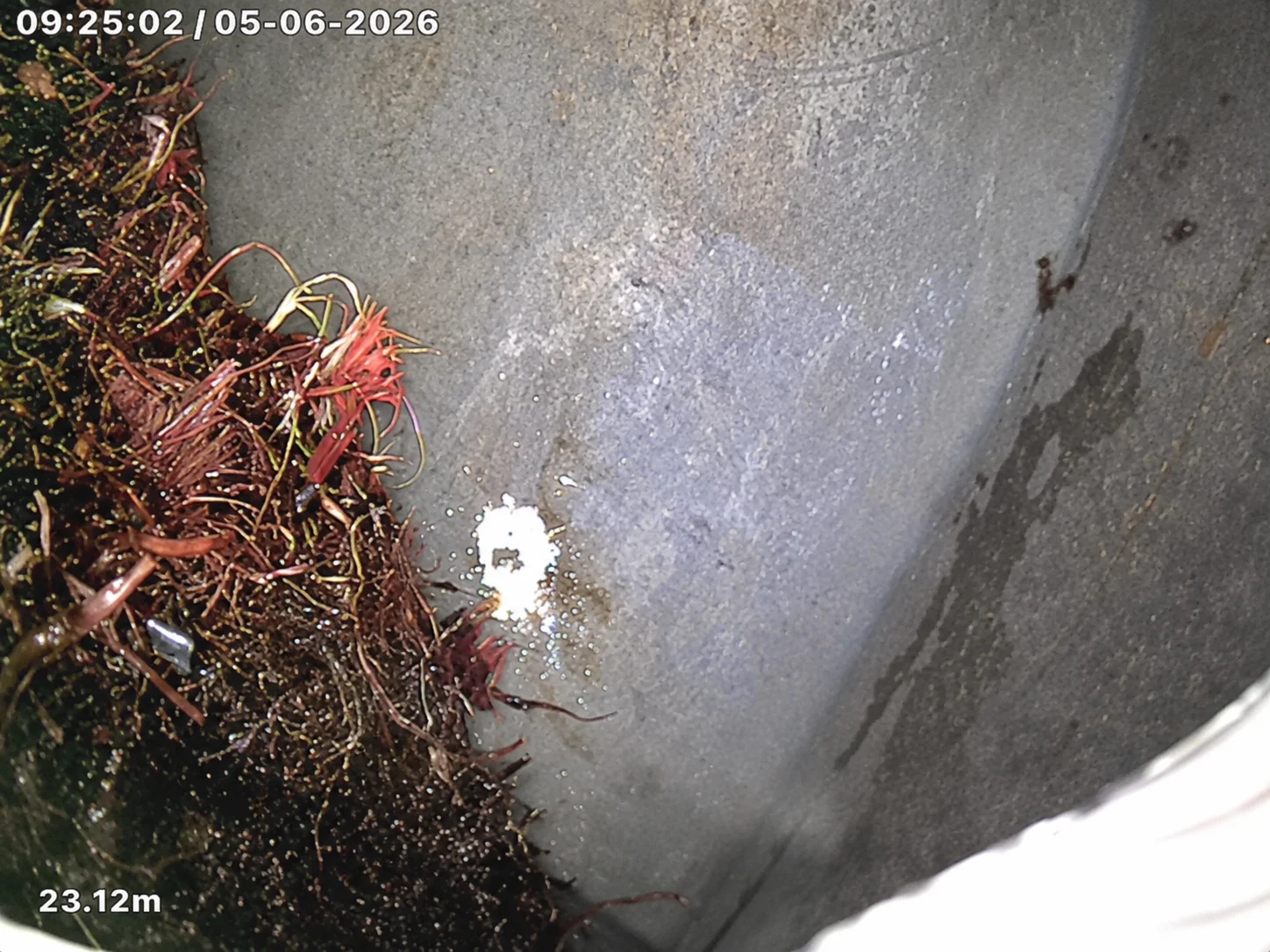
When a pipe develops even a microscopic crack or a joint seal begins to fail, moisture escapes into the surrounding soil. Tree roots, which naturally grow towards moisture gradients, detect this dampness and follow it right to the source. Once they find the crack, hair-like feeder roots squeeze their way inside.
Once inside the pipe, the environment is perfect for rapid growth. The roots multiply, forming a dense, web-like mass that acts as a net, catching toilet paper, grease, and other debris. Before long, the pipe is completely choked off.
The Earthenware vs. PVC Problem
The age of your home plays a massive role in your vulnerability to root intrusion. If you live in an older Gold Coast suburb like Southport, Labrador, or Palm Beach, and your home was built before the 1980s, there’s a high chance your property still relies on earthenware (terracotta) pipes.
Earthenware pipes were laid in short sections, meaning there are numerous joints along the line. Over decades, the ground shifts, the mortar used to seal these joints deteriorates, and cracks form. This makes earthenware pipes incredibly susceptible to root invasion.
Modern homes, or those that have had their plumbing upgraded, typically use PVC (plastic) pipes. PVC is laid in longer lengths with fewer joints, and the joints are glued together, creating a much tighter seal. While PVC is significantly more resistant to roots, it’s not entirely immune. Ground movement can still cause PVC pipes to crack or joints to separate, providing an entry point for aggressive roots.
The Worst Offending Trees in Gold Coast Yards
Not all trees are created equal when it comes to plumbing destruction. Some species have incredibly aggressive, fast-growing root systems that will travel significant distances to find water. If you have acreage in Tallebudgera or Mudgeeraba, or even a standard suburban block in Nerang, you need to be mindful of what you plant near your sewer lines.
Here are the worst offenders commonly found in Gold Coast gardens:
- Fig Trees (Ficus species): These are notorious for their invasive root systems. Whether it’s a Moreton Bay Fig or a smaller ornamental variety, their roots are powerful enough to lift concrete driveways and crush older pipes.
- Umbrella Trees (Schefflera actinophylla): A common sight in tropical gardens, the Umbrella Tree has a vigorous root system that aggressively seeks out moisture, making it a frequent culprit in blocked drains.
- Jacarandas: While beautiful when in bloom, Jacarandas have extensive root networks that can easily infiltrate compromised pipes.
- Golden Cane Palms: Often planted in clusters for privacy screening, these palms have dense, fibrous root mats that can quickly choke a cracked pipe.
- Camphor Laurel: An invasive weed species in many parts of Queensland, the Camphor Laurel has a massive, thirsty root system that causes widespread damage to underground infrastructure.
The Warning Signs: A Timeline of Trouble
Tree roots don't block a pipe overnight. It’s a gradual process, and if you know what to look for, you can catch the problem before it turns into a costly emergency.
Early Warning Signs (Weeks 1-4 of intrusion):
- Gurgling sounds: You might hear a distinct "glug-glug" sound from your sink, shower, or toilet after water drains away. This is caused by air struggling to get past the partial blockage.
- Slow draining: Water takes noticeably longer to empty from the sink or shower basin.
Moderate Signs (Weeks 4-8 of intrusion):
- Foul odours: A persistent smell of sewage or rotting vegetation coming from your drains or the yard near the sewer line.
- Fluctuating toilet water levels: The water level in the toilet bowl might be unusually high or low.
Severe Signs (Complete Blockage):
- Sewage backup: The nightmare scenario. Raw sewage backs up through the lowest drain point in the house, usually a floor grate in the bathroom or laundry.
- Soggy patches in the yard: If the pipe has completely ruptured, you might notice unusually green, lush, or soggy patches of grass above the sewer line, even during dry weather.
If you notice any of these signs, it’s time to call in the professionals for blocked drains Gold Coast services before the situation escalates.
Every Fix Compared (With Realistic Gold Coast Costs)
When we diagnose tree roots in drain pipes, usually via our CCTV drain inspections, the next question is always: "How do we fix it, and how much will it cost?"
Here is an honest breakdown of the available solutions, from temporary management to permanent fixes, with realistic 2026 pricing for the Gold Coast.
1. Chemical Foaming (RootX or similar)
- How it works: A specialized herbicidal foam is pumped into the drain. The foam expands to fill the pipe, coating the roots and killing them on contact without harming the tree itself. The dead roots eventually rot away and are flushed down the line.
- Best for: Minor root intrusions, preventative maintenance, or buying time before a permanent repair. It will not clear a completely blocked pipe.
- Cost range: Typically $150 – $300 per application.
- Recurrence expectation: High. The roots will grow back. This is an ongoing maintenance strategy, usually requiring annual applications.
2. High-Pressure Water Jetting (Jet Rodding) + Root Cutting
- How it works: We use a high-pressure water jetter equipped with a specialized root-cutting turbine head. The water pressure (often exceeding 4,000 PSI) spins the cutting blade, slicing through the root mass and flushing the debris away.
- Best for: Clearing moderate to severe blockages quickly. It restores flow immediately.
- Cost range: Typically $250 – $450 for a standard jet rodding service.
- Recurrence expectation: High. Think of this like mowing the lawn; you’ve cut the roots back, but the crack in the pipe is still there. The roots will return, often thicker than before, usually within 6 to 12 months.
3. Patch Relining
- How it works: If the CCTV inspection reveals that the root intrusion is isolated to a single crack or joint, we can install a structural patch. A fiberglass mat impregnated with epoxy resin is inflated inside the pipe over the damaged section. It cures to form a rock-hard, watertight seal, essentially creating a new pipe within the old pipe.
- Best for: Localized damage in an otherwise healthy pipe.
- Cost range: Typically $600 – $1,200 per patch, depending on the pipe diameter and depth.
- Recurrence expectation: Very low at the patched location. The patch is stronger than the original pipe and completely root-proof. However, roots may eventually find another weak joint further down the line.
4. Full Pipe Relining (Trenchless Repair)
- How it works: Similar to patch relining, but we line the entire length of the damaged pipe (often from the house to the boundary connection). This completely seals all joints and cracks, providing a permanent, root-proof solution without digging up your yard.
- Best for: Extensive root damage, multiple cracks, or pipes located under driveways, retaining walls, or expensive landscaping where excavation is undesirable.
- Cost range: Typically $400 – $800 per lineal metre. A standard residential relining job often ranges from $3,000 to $8,000+.
- Recurrence expectation: Zero. Pipe relining comes with a long-term guarantee (often 25+ years) and completely eliminates the root intrusion problem in the lined section.
5. Traditional Excavation and Replacement
- How it works: The old-school method. We dig a trench, remove the damaged section of the pipe (usually earthenware), and replace it with new PVC piping.
- Best for: Collapsed pipes that cannot be relined, or shallow pipes located in easily accessible dirt or grass areas where digging is cheap and easy.
- Cost range: Highly variable. If it’s a shallow pipe in a garden bed, it might cost $1,000 – $2,500. If we have to cut through a concrete driveway or excavate deep trenches, costs can easily exceed $5,000 – $10,000+, not including the cost of restoring the landscaping or concrete.
- Recurrence expectation: Very low, provided the new PVC is installed correctly with proper glued joints.
| Repair Method | Best For | Estimated Cost (AUD) | Recurrence Risk |
|---|---|---|---|
| Chemical Foaming | Minor intrusion / Maintenance | $150 – $300 | High (Requires ongoing use) |
| Jet Rodding + Cutting | Clearing blockages quickly | $250 – $450 | High (Roots will grow back) |
| Patch Relining | Isolated cracks / Single joints | $600 – $1,200 per patch | Low (At the patched site) |
| Full Pipe Relining | Extensive damage / Under concrete | $400 – $800 per metre | Zero (Permanent fix) |
| Excavation | Collapsed pipes / Easy access | $1,000 – $10,000+ | Low (With new PVC) |
Who is Responsible? Council vs. Private Property
A common point of confusion for Gold Coast homeowners is figuring out who is actually responsible for paying to fix the blocked drain.
In Queensland, the general rule of thumb is that the property owner is responsible for all plumbing infrastructure within their property boundary, right up to the connection point with the City of Gold Coast’s sewer main.
If the tree roots have invaded the pipe inside your property line, you are footing the bill, even if the roots belong to a tree planted on the council strip. Conversely, if the blockage is located in the council’s main sewer line, the council is responsible for clearing it.
When we attend a blocked drain, our first step is always to locate the blockage. If our CCTV camera shows the issue is in the council main, we will advise you to contact the City of Gold Coast directly.
Tenant vs. Landlord Responsibilities
If you are renting a property, dealing with tree roots in drain pipes is almost always the landlord's responsibility. It is considered a structural maintenance issue, not a result of tenant negligence (unlike flushing wet wipes or pouring grease down the sink).
If you are a tenant experiencing a blocked drain, you should contact your property manager immediately. If it is an after-hours emergency and raw sewage is overflowing, check your lease agreement for the nominated emergency plumber.
Frequently Asked Questions
Can I use copper sulphate to kill tree roots in my drains?
While copper sulphate was historically used to kill roots, it is highly toxic to the environment and can damage the beneficial bacteria in the municipal sewer system. We do not recommend it. Modern foaming rooticides are much safer and more effective.
Will cutting the tree down fix the problem?
Not immediately. Even if you cut the tree down, the root system can survive underground for months or even years, continuing to seek out moisture in your pipes. You still need to repair the crack in the pipe to prevent future issues.
Does home insurance cover tree root damage to pipes?
In most cases, standard home insurance policies in Australia do not cover the cost of repairing pipes damaged by tree roots, as it is considered a gradual maintenance issue rather than a sudden, unforeseen event. However, they may cover the resulting water damage to your home (e.g., ruined carpets from a sewage overflow). Always check your specific Product Disclosure Statement (PDS).
How long does pipe relining take?
Most residential pipe relining jobs can be completed in a single day. Because it is a trenchless technology, there is no digging required, meaning we can fix the pipe and be off your property quickly, with zero damage to your landscaping.
Need Help With Tree Roots in Your Drains?
Dealing with tree roots in drain pipes can be stressful, but you don't have to tackle it alone. At Creative Coast Plumbing & Gas, we are your local Gold Coast leak detection and blocked drain specialists. We carry the full suite of non-destructive tech, including high-definition CCTV cameras and high-pressure jetters, allowing us to find the problem and fix it in the same visit.
We pride ourselves on straight-talking advice and upfront written pricing. If you suspect tree roots are eating your sewer pipes, don't wait for a sewage backup. Call Nic today on 0485 090 185 to book an inspection.
Sound familiar?
Get It Checked Before It Gets Expensive
Same-day leak detection across the Gold Coast — found, fixed and reported in one visit.