An unexpectedly high water bill arrives in the mail, or perhaps you've noticed a suspiciously lush patch of grass that never seems to dry out. When the problem isn't a dripping tap or a running toilet, you're likely dealing with a homeowner's worst nightmare: an underground water leak.
Unlike a burst pipe inside your walls that makes itself known immediately, underground leaks can run silently for months. They erode soil, undermine foundations, and send thousands of litres of treated water into the earth—along with your hard-earned money. For Gold Coast properties, the challenge of underground water leak detection is uniquely tied to our local environment, from the sandy soils of our coastal suburbs to the dense clay of the hinterland.
At Creative Coast Plumbing & Gas, we specialise in finding and fixing these invisible issues. With over 18 years of experience and a full suite of non-destructive leak detection technology, we don't just guess where the leak is—we pinpoint it accurately and repair it in the same visit. Here is your complete guide to understanding, finding, and fixing underground water leaks on the Gold Coast.
How Gold Coast Soil Types Hide Underground Leaks
The Gold Coast is geographically diverse, and the type of soil your property sits on dramatically affects how an underground leak behaves. Understanding this is the first step in recognising you have a problem.
Coastal Sandy Soils (Hope Island, Paradise Point, Sanctuary Cove)
If you live near the water or in coastal suburbs, your property likely sits on sandy, highly porous soil. When an underground mains pipe leaks here, the water drains away almost instantly. You won't see puddles, and you won't get a boggy lawn. The water simply vanishes deep into the sand. In these areas, the only warning signs are usually a spinning water meter or a massive quarterly water bill. Because the water doesn't pool, acoustic detection is critical to hear the leak before it washes away the sand supporting your driveway or retaining walls.
Hinterland Clay Soils (Tallebudgera Valley, Currumbin Valley, Ashmore)
Move inland or up into the acreage properties, and the soil profile changes to dense, reactive clay. Clay does not drain well. An underground leak here will quickly saturate the ground, pushing water up to the surface. You'll notice squelchy, boggy patches in the yard, unusually green grass during dry spells, or even water pooling against your foundation slab. While these visual clues make the general area obvious, the dense clay can muffle the sound of the escaping water, making precise pinpointing tricky without the right equipment.
The First Step: The Meter Isolation Test
Before calling in the experts, you can confirm if you actually have a leak on your property by performing a simple meter isolation test. We have a detailed guide on how to check for a water leak at home, but here is the quick version for underground mains:
- 1. Turn off every tap, appliance, and toilet in the house.
- 2. Locate your water meter (usually near the front boundary).
- 3. Check the dials. If the small dial or the numbers are moving, water is flowing.
- 4. Turn off the isolation valve at your house (usually near the garden tap).
- 5. Check the meter again. If it is still spinning, the leak is on the underground mains pipe between the meter and your house.
If you've confirmed a mains leak, it's time to bring in the heavy artillery.
Our Underground Water Leak Detection Technology
Gone are the days of a plumber turning up and digging random holes in your lawn hoping to strike water. Modern underground water leak detection relies on sophisticated, non-destructive technology. At Creative Coast Plumbing & Gas, we carry the full kit on every truck, allowing us to adapt to the specific conditions of your property.
Acoustic Ground Microphones
This is our frontline tool. Escaping water creates a distinct frequency as it vibrates against the pipe and surrounding soil. We use highly sensitive acoustic ground microphones to listen through concrete, bitumen, and soil. By tracing the path of the pipe and listening for the loudest point of the frequency, we can pinpoint the exact location of the rupture. This is particularly effective for high-pressure mains leaks.
Tracer Gas Detection
When a leak is too quiet to hear—often the case with tiny pinhole leaks, deep pipes, or pipes buried in sound-muffling clay—we use tracer gas leak detection. We drain the water line and fill it with a safe, inert mixture of nitrogen and hydrogen. Because hydrogen molecules are incredibly small, they escape through the leak and rise straight up through the soil or concrete. We then use a highly sensitive gas "sniffer" to detect the exact point where the gas is surfacing.
Thermal Imaging Cameras
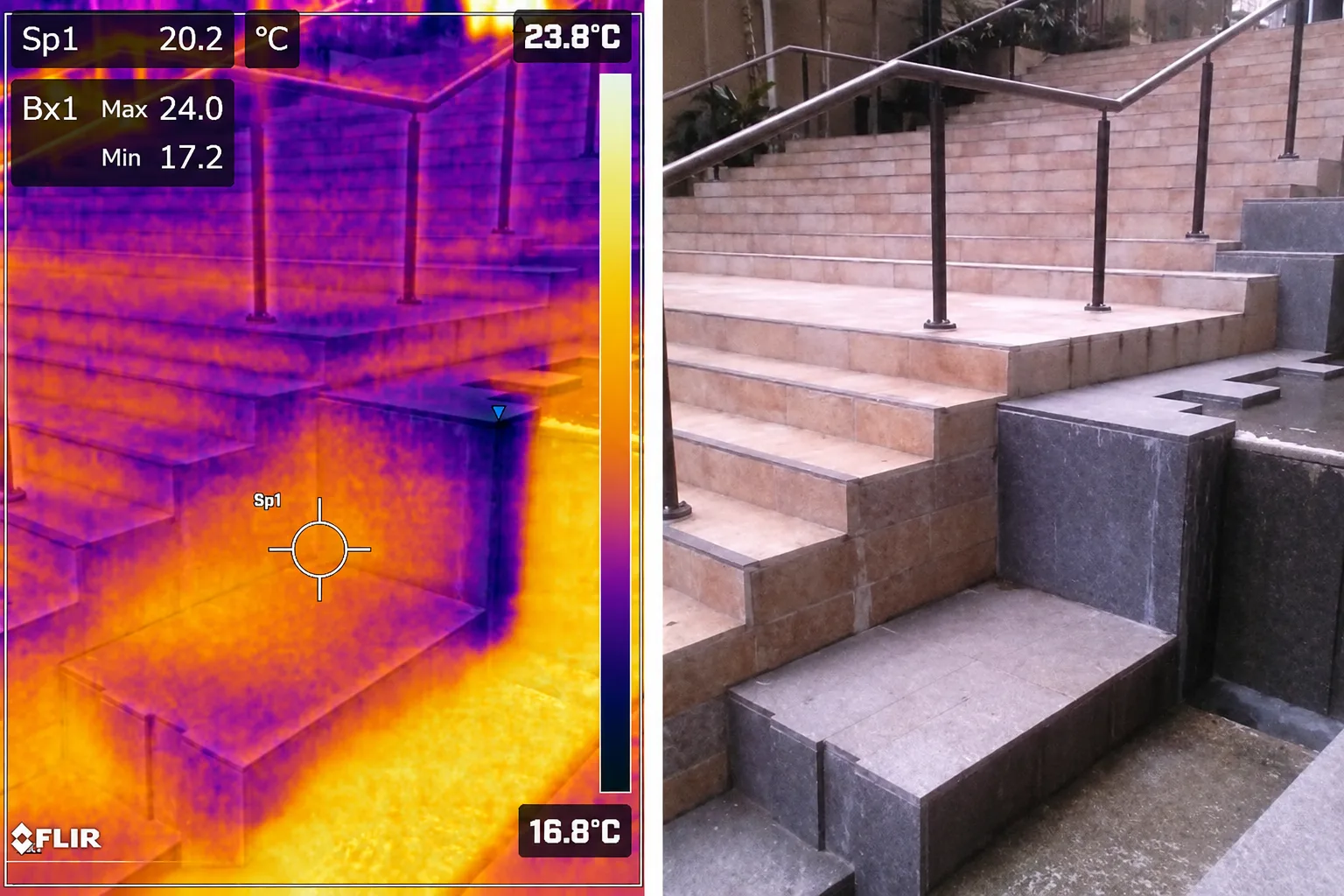
While thermal imaging is often associated with indoor leaks, it is highly effective for underground hot water lines. If the pipe running from your hot water system to your bathroom is leaking under a concrete path or shallow soil, the thermal camera will detect the subtle temperature difference on the surface, showing us a clear heat bloom right above the leak.
Pipe Locators and Correlators
You can't find a leak if you don't know where the pipe is. We use electromagnetic pipe locators to trace the exact path and depth of metallic pipes and tracer wires. For long runs—such as the mains water feed on acreage properties in Currumbin Valley—we use correlators. By placing sensors at two different access points (like the meter and the house valve), the correlator measures the time delay of the leak sound reaching each sensor, mathematically calculating the exact distance to the leak.
The Challenge of Acreage and Long-Run Mains
Properties in areas like Tallebudgera Valley or large blocks in Ashmore present unique challenges. The water meter might be 50 to 100 metres away from the house, running under driveways, retaining walls, paddocks, and established gardens.
A leak on a long run can be incredibly difficult to find without commercial-grade equipment. The pressure drop over a long distance can make acoustic detection harder, and the sheer volume of ground to cover requires systematic tracing. In these scenarios, we often combine pipe location to map the route, followed by tracer gas to definitively mark the spot without digging up 50 metres of trench.
Pool and Irrigation Line Leaks
Not all underground leaks are on your main water supply. Two of the most common culprits for hidden water loss are swimming pools and automated irrigation systems.
- Irrigation Leaks: These only leak when the system is running, making them hard to spot on a meter test. They often present as a section of the garden that is constantly flooded or a massive drop in water pressure at the sprinkler heads.
- Pool Leaks: If your pool is losing more than a few millimetres a day to evaporation, you likely have a leak in the underground return or suction lines. We use specialised pressure testing and acoustic gear to isolate pool plumbing. For more details, see our pool leak detection guide.
Realistic Costs: Detection and Repair on the Gold Coast
One of the most common questions we get is, "How much is this going to cost?" While every job is different, we believe in upfront, transparent pricing. We don't use "$0 call out" gimmicks that hide inflated hourly rates.
Here are the typical, realistic cost ranges you can expect for underground leak detection and repair on the Gold Coast in 2026:
| Service | Typical Cost Range (AUD) | What's Included |
|---|---|---|
| Standard Leak Detection | $350 – $550 | Full acoustic and thermal sweep, pipe location, pinpointing the leak on a standard residential block. |
| Complex/Tracer Gas Detection | $450 – $750 | Required for very deep leaks, acreage properties, or when tracer gas must be deployed. |
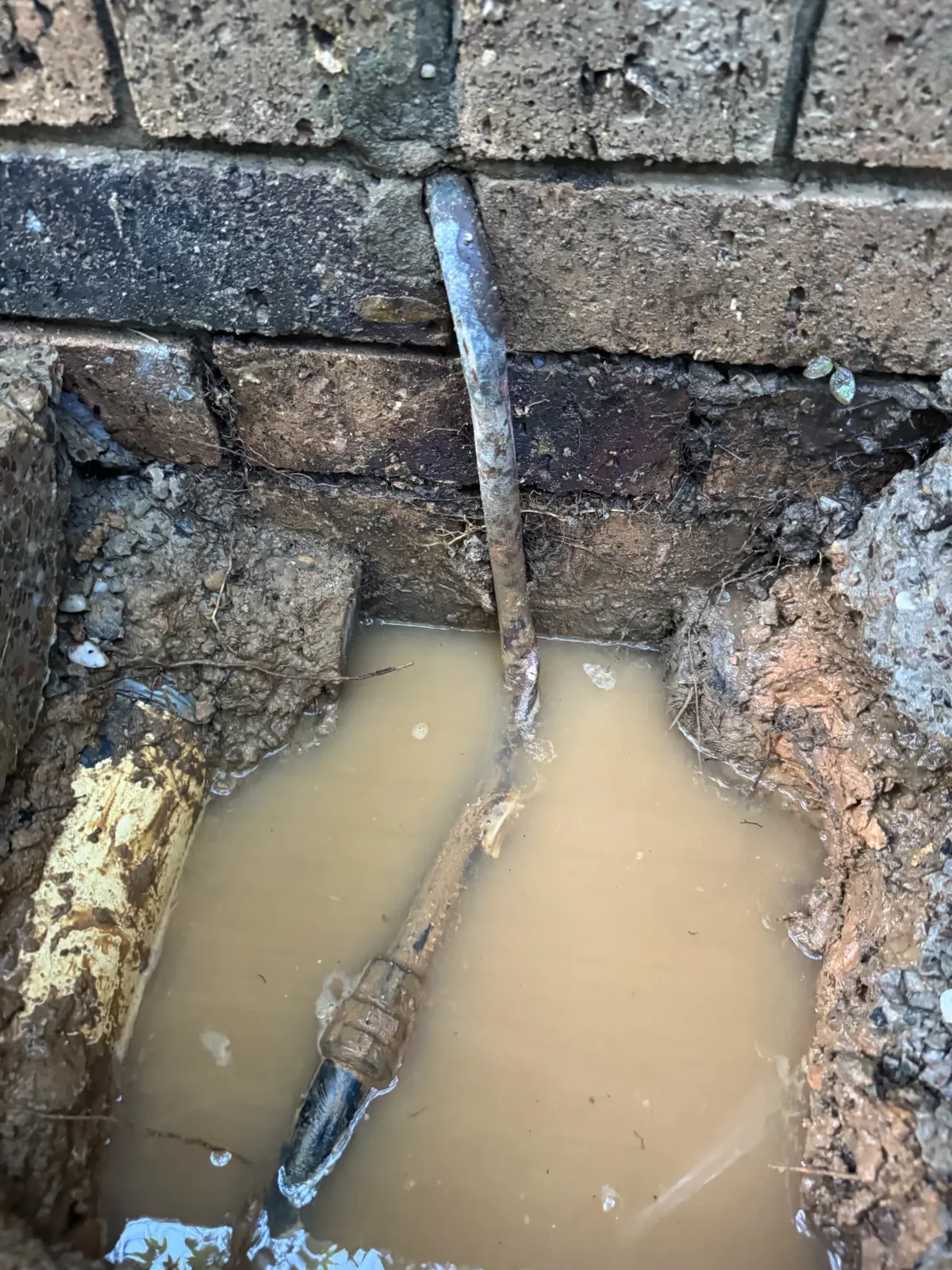
| Spot Repair (Dirt/Grass) | $250 – $450 | Digging down to the exposed pipe, cutting out the damaged section, and welding/crimping in a new piece. |
| Spot Repair (Under Concrete) | $500 – $900+ | Includes concrete cutting, excavation, pipe repair, and backfilling (does not usually include concrete reinstatement). |
| Full Mains Replacement | $1,500 – $4,000+ | If the pipe is old poly or heavily degraded copper, it is often cheaper long-term to run a completely new line rather than fixing multiple blowouts. |
Note: Because we are a full-service plumbing company, we find and fix the leak in the same visit, saving you the cost of hiring a separate detection company and a repair plumber.
Insurance Claims and Water Bill Rebates
Finding an underground leak is stressful, but there is some good news regarding your wallet.
Firstly, if the leak has caused damage to your property (such as undermining a driveway or flooding a retaining wall), your home insurance may cover the cost of the "search and access" (the detection and the digging) as well as the resulting damage. They typically do not cover the cost of the actual pipe repair itself. As licensed QBCC plumbers, Creative Coast Plumbing & Gas provides comprehensive, insurance-ready reports detailing the cause, location, and repair method to support your claim.
Secondly, the City of Gold Coast offers a Concealed Water Leak policy. If you have had a hidden underground leak repaired by a licensed plumber, you can apply for a rebate on your excess water charges. We provide the necessary compliance certificates and repair invoices you need to submit this application to the council.
Frequently Asked Questions
Can I find an underground water leak myself?
You can confirm the presence of a leak using the meter isolation test, and you might spot visual signs like boggy grass. However, pinpointing the exact location under soil or concrete requires specialised acoustic and gas detection equipment. Digging blindly usually results in property damage and a much higher repair bill.
Does homeowners insurance cover underground water leaks?
Policies vary, but most Australian home insurance policies cover the resulting damage from a leak and the cost to locate and access the pipe (e.g., cutting concrete). They generally do not cover the cost of the plumber fixing the pipe itself. Always check your specific Product Disclosure Statement (PDS).
How long does it take to find and fix an underground leak?
With our advanced equipment, we can typically locate the leak within 1 to 2 hours. If the leak is accessible in dirt or grass, the repair can often be completed in another hour. Concrete access or deep excavations will take longer, but we aim for a same-day find-and-fix.
Should I repair the leak or replace the whole pipe?
If your home is relatively new and the leak was caused by a single point of damage (like a tree root or a rock rubbing the pipe), a spot repair is perfect. However, if you have older blue poly piping or degraded copper that has burst multiple times, we will strongly recommend a full mains replacement to prevent future blowouts.
Need an Underground Leak Found Fast?
An underground water leak won't fix itself, and every day you wait is costing you money on your water bill and potentially damaging your property's foundations.
At Creative Coast Plumbing & Gas, we are your local Gold Coast underground water leak detection specialists. We use the latest non-destructive technology to pinpoint the problem accurately, and as fully licensed plumbers, we dig it up and fix it on the spot. We provide upfront pricing, honest advice, and the paperwork you need for council rebates and insurance claims.
Don't let a hidden leak wash your money away. Call Nic today on 0485 090 185 or contact us online to book your leak detection service.
Sound familiar?
Get It Checked Before It Gets Expensive
Same-day leak detection across the Gold Coast — found, fixed and reported in one visit.