Gold Coast pools work hard year-round. The combination of Queensland sun, sandy soils that shift with every wet season, and ageing pipework means pool leaks are among our most common callouts — and the most misdiagnosed. The good news: almost every pool leak can be found without draining a drop, and most repairs are far simpler than owners fear. Here's exactly how we do it.
Step 1: Is It A Leak Or Just Evaporation?
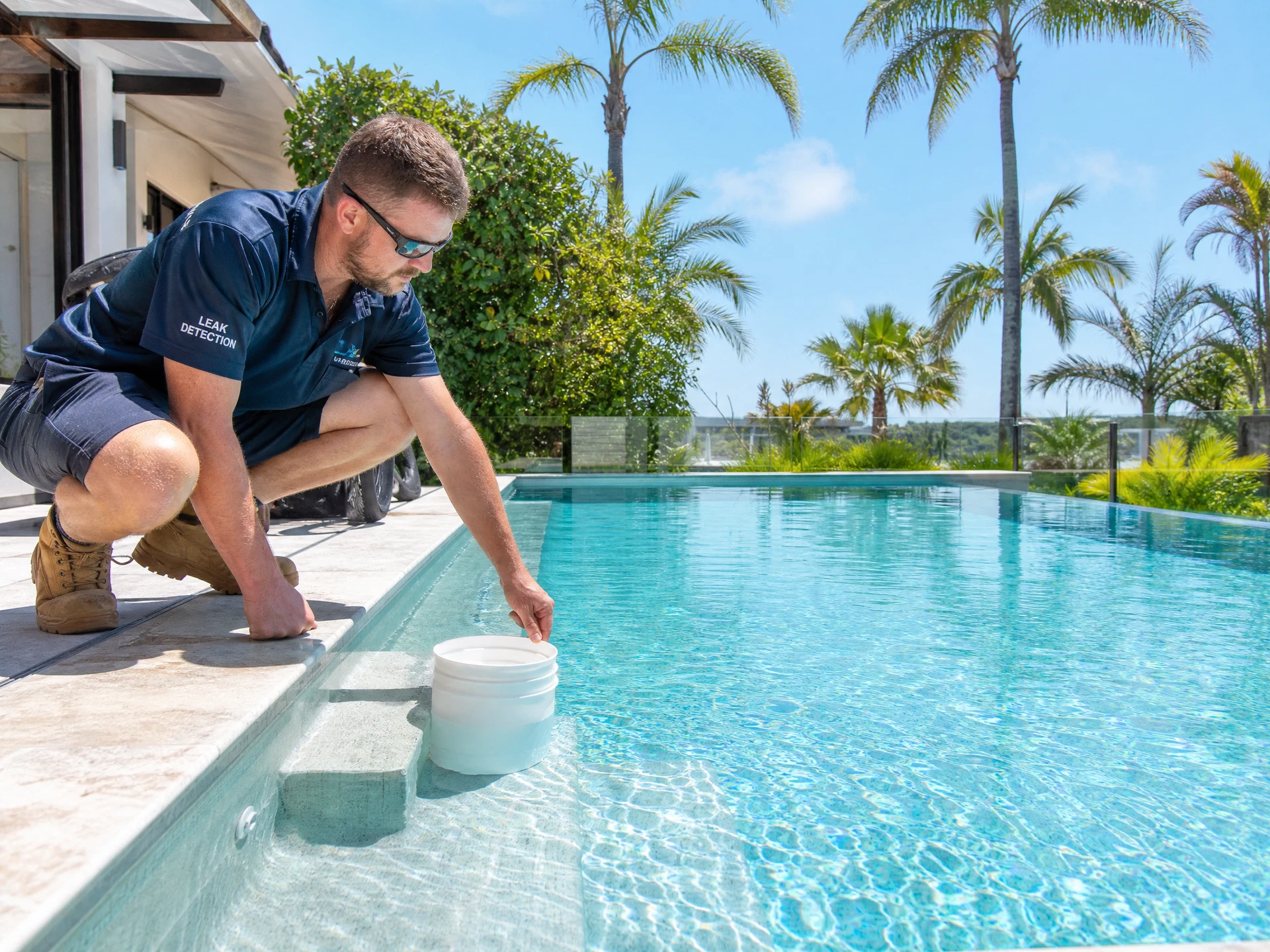
Gold Coast pools lose 25–50mm of water per week to evaporation in summer — more on windy days or with a heated pool. So a dropping water level alone doesn't confirm a leak. Before you call anyone, do the bucket test tonight:
- Fill a bucket with pool water and place it on a pool step
- Mark the water level inside the bucket and the pool water level on the outside
- Leave for 24 hours with the pump off
- Compare: if the pool drops more than the bucket, you have a leak
If the test confirms a leak, the next question is: how fast is it losing water? That's where the Leakalyzer comes in.
Step 2: The Leakalyzer — Confirmed In 5–10 Minutes
The Leakalyzer (by Anderson Manufacturing, leaktools.com) is the professional standard for confirming pool water loss. This precision instrument measures water level changes to 1/10,000th of an inch and plots real-time data on a digital graph. In 5–10 minutes, we can confirm whether the pool is leaking, quantify the loss in litres per hour, and — critically — compare pump-on vs pump-off data to determine whether the plumbing or the shell is the likely source.
If the pool loses water faster with the pump running, the plumbing is the culprit. If it loses water at the same rate regardless, the shell or fittings are the source. This one piece of data directs everything that follows and prevents misdiagnosis.
Step 3: Shell Isolation with Pool Plugs
We carry an array of pool plugs sized for every fitting type used on Gold Coast pools — returns, suction lines, cleaner ports, spa circuits, main drains. With every fitting plugged, we watch the water level. A pool that holds level with the plumbing isolated has a plumbing leak. One that keeps dropping has a shell or fitting leak. This isolation step is simple but critical — it prevents the most common and expensive mistake in pool leak detection: digging up plumbing when the shell is the problem.
Step 4: Pressure Testing Every Plumbing Line
If the Leakalyzer and plug test point to the plumbing, we pressure test each circuit independently — suction lines, return lines, cleaner lines, and spa circuits. Each line is isolated at the pool end and pressurised with air. A line that holds pressure is intact; one that drops has a leak. We test each circuit separately so we know exactly which one to excavate, and exactly where.
Step 5: Dye Testing — Yes, We Get In The Pool
For shell cracks, fitting leaks, and skimmer box failures, dye testing is the most accurate method — and it requires someone in the water. We inject a small amount of coloured dye near suspected leak points: the skimmer box joint, light fittings, return jets, spa jets, and any visible cracks. If the dye gets drawn into the crack or fitting, we've found the leak. We don't send a camera on a stick and call it done — we suit up and get in. In a Gold Coast summer, it's honestly one of the better parts of the job.
Step 6: Acoustic Detection for Underground Leaks
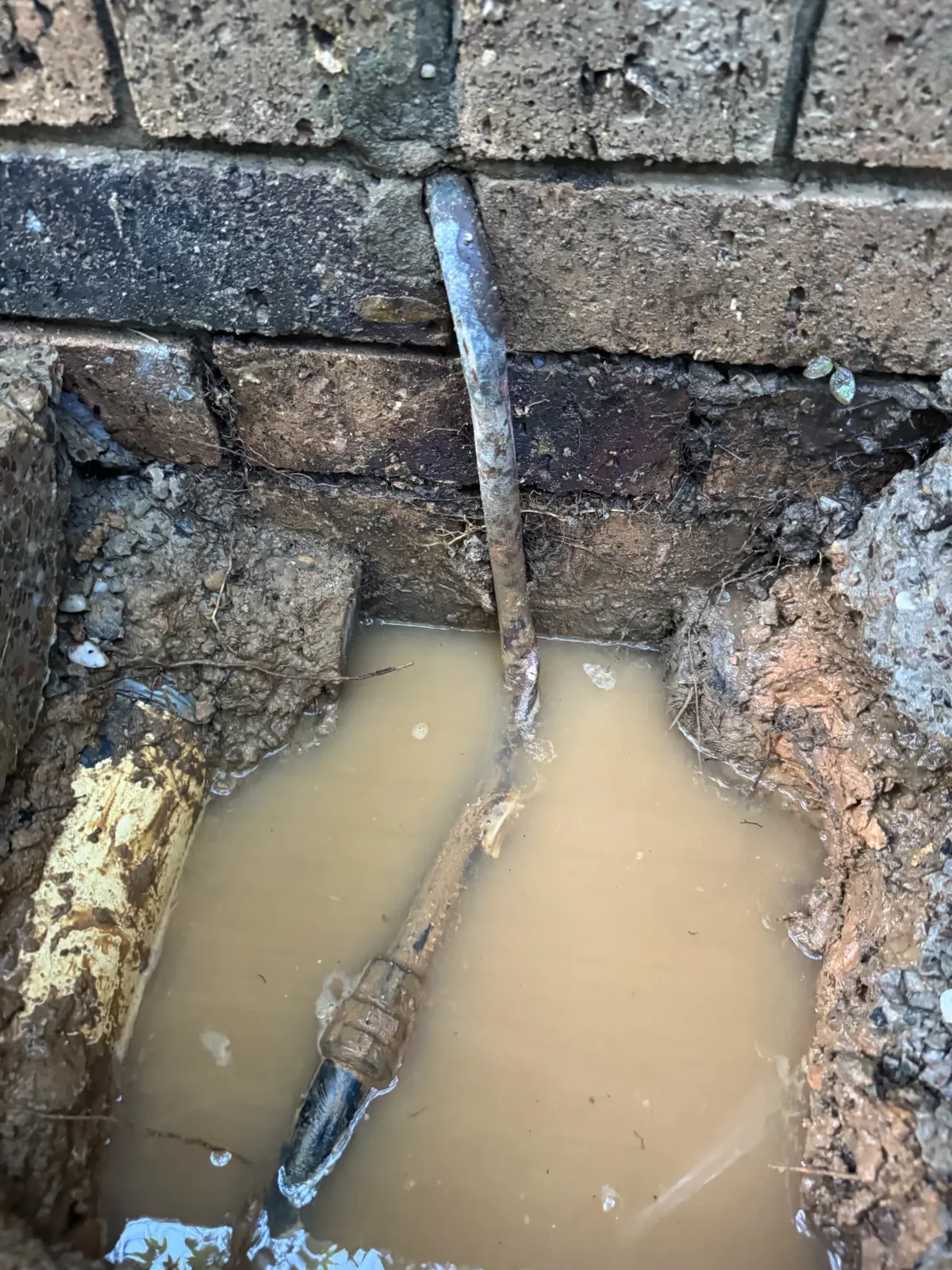
When a plumbing line has failed underground, acoustic listening equipment lets us hear the pressurised water escaping through the pipe failure — without digging. Ground microphones and acoustic correlators pick up the leak's frequency signature through soil and concrete. By measuring the signal from two points, we calculate the exact position along the pipe run. The result is a precise excavation point — typically a 300–600mm opening at the right spot, rather than trenching your entire pool surrounds.
Where Gold Coast Pools Actually Leak
Skimmer box joint
The single most common leak point we find. The seal between the concrete or fibreglass shell and the plastic skimmer box cracks from ground movement — particularly common in Gold Coast's sandy soils. The pool drains slowly to the bottom of the skimmer opening, often stabilising at a consistent level that gives it away.
Underground suction and return lines
The buried pipes between pool and pump are under constant pressure whenever the pump runs. Wet, boggy, or unusually green patches of lawn between the pool and the equipment pad are the giveaway. Pressure testing identifies which line is failing; acoustic equipment locates the exact failure point.
Light fittings and penetrations
Every point where something passes through the shell — lights, returns, spa jets, cleaner ports — is a potential leak path as sealants age. Dye testing around each fitting confirms whether water is escaping.
Structural shell cracks
Less common but most serious. Ground movement in Gold Coast's sandy soils can cause fibreglass and concrete shells to crack. Dye testing along visible cracks confirms whether water is actually escaping or the crack is cosmetic. Structural cracks require proper repair — not just patching.
Why Fix It Now (Not Next Season)
A leaking pool wastes thousands of litres of chemically treated water into the soil around your pool shell and home foundations every week. That water erodes the backfill supporting your pool shell, keeps your pump and chlorinator working overtime, and washes away the chemicals you're constantly adding. The repair cost is almost always recovered within two or three water bills. Most customers wish they'd called sooner.
Topping up more than once a week? Call Creative Coast Plumbing & Gas on 0485 090 185 for swimming pool leak detection anywhere on the Gold Coast. We find it, we fix it, and we get in the pool — same visit, no draining required.
Sound familiar?
Get It Checked Before It Gets Expensive
Same-day leak detection across the Gold Coast — found, fixed and reported in one visit.