You turn off the kitchen tap and the pipes let out a sharp bang that rattles the wall. The washing machine finishes its fill cycle and something deep in the wall sounds like someone swung a hammer at it. If this is familiar, you have water hammer — and while it might seem like just an annoying noise, it is actually a pressure shockwave that can crack fittings, split solder joints and, over time, cause a full pipe failure.
Water hammer is one of the most common plumbing complaints we hear from Gold Coast homeowners, and it is more prevalent here than in many other parts of Australia. The combination of high mains water pressure (Gold Coast City Council supplies water at up to 1,100 kPa in some areas), older housing stock with copper pipework, and fast-closing solenoid valves in modern appliances creates the perfect conditions for it. This guide explains exactly what is happening, what you can do yourself, and when you need a licensed plumber.
What Actually Causes Water Hammer?
Water hammer occurs when a fast-moving column of water is suddenly stopped or forced to change direction. Water is essentially incompressible — unlike air, it cannot absorb the shock of an abrupt stop. Instead, the kinetic energy of the moving water has to go somewhere, and it does: it travels back through the pipe as a pressure wave, slamming into bends, fittings and the pipe walls as it goes.
The sound you hear is that pressure wave hitting a hard surface — usually a bracket, a wall stud, or a fitting. The louder the bang, the higher the pressure and the faster the valve closed. Modern solenoid valves in dishwashers, washing machines and toilet cisterns are particularly bad offenders because they close in milliseconds, far faster than a hand-turned tap.
There are two distinct types of water hammer, and they have different causes and fixes:
- Classic water hammer: caused by fast valve closure — the bang happens the moment a tap or appliance valve closes.
- Resonance water hammer: caused by pipe vibration — the pipes rattle or hum continuously while water is flowing, not just at closure. This is usually a pressure or flow-rate issue.
Why Is Water Hammer Worse On The Gold Coast?
Gold Coast mains water pressure is among the highest in South East Queensland. While the Australian standard for residential supply allows up to 500 kPa at the meter, many Gold Coast properties — particularly those in lower-lying areas like Labrador, Southport and parts of Broadbeach — receive pressure well above this. High pressure means more kinetic energy in the moving water column, which means a bigger shockwave when that column stops.
The Gold Coast housing stock also plays a role. Homes built in the 1970s through 1990s — which make up a large proportion of the established suburbs from Labrador to Burleigh Heads — used copper pipe throughout. Copper is an excellent pipe material, but it is rigid and transmits pressure waves very efficiently. Newer plastic pipe systems (PEX and CPVC) absorb some of the shock, but copper carries it cleanly to every bracket and fitting in the system.
Finally, modern appliances have made the problem worse. A 1980s top-loader washing machine filled slowly through a manual valve. A 2024 front-loader uses a solenoid valve that opens and closes in under 50 milliseconds. That speed is great for efficiency but brutal on pipework.
Is Water Hammer Actually Dangerous?
Yes — if it is left unaddressed. A single water hammer event is unlikely to cause immediate damage, but repeated shockwaves over months or years cause cumulative fatigue in the pipework. The most common damage we see in Gold Coast homes includes:
- Cracked solder joints at elbows and tees — particularly in copper systems over 20 years old
- Loosened pipe brackets, allowing pipes to move freely and amplify the banging
- Damaged solenoid valves in washing machines and dishwashers
- Failed pressure-reduction valves (PRVs) that were already marginal
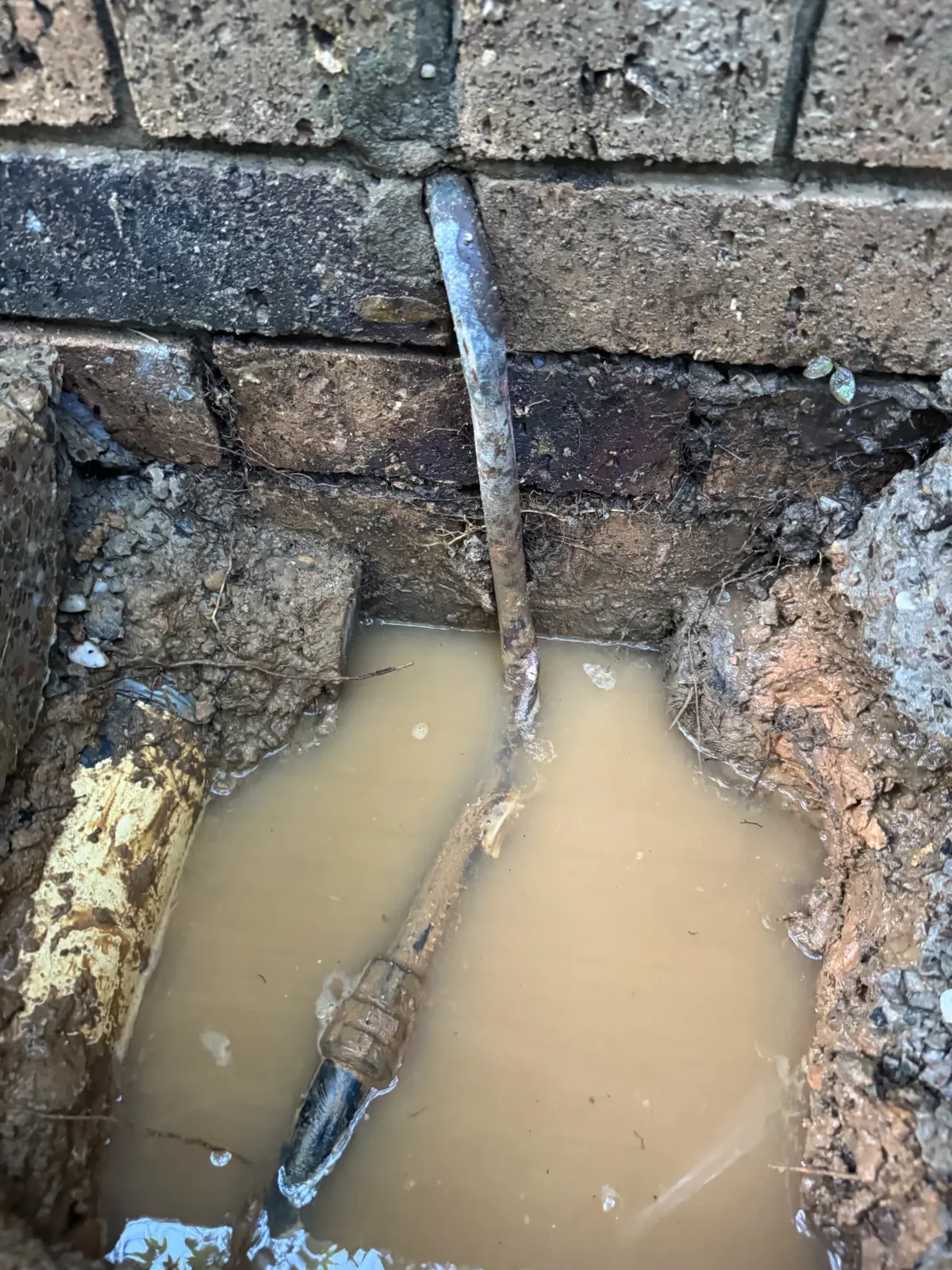
- In severe cases: split pipes, particularly at the weakest point in the system
If you are already hearing water hammer, your pipes are already experiencing stress. The question is not whether it will eventually cause damage — it is how long before it does.
Diagnosing Your Water Hammer
Before you can fix water hammer, you need to understand what type you have and what is causing it. Here is a simple diagnostic process:
Step 1: Identify when the bang occurs
If the bang happens when you turn off a tap or when an appliance finishes filling, it is classic water hammer from fast valve closure. If the pipes rattle or hum while water is flowing, it is resonance water hammer from excessive pressure or a loose pipe.
Step 2: Check your water pressure
You can buy a simple water pressure gauge from a hardware store for around $30 and attach it to an outdoor tap. Normal residential pressure should be between 200 and 500 kPa. If you are reading above 500 kPa, high mains pressure is almost certainly contributing to your water hammer, and a pressure-reduction valve (PRV) is the fix.
Step 3: Identify the source
Turn off appliances one at a time and listen for which one triggers the bang. Washing machines, dishwashers and toilet cisterns are the most common culprits. If the bang happens when you turn off a hand tap, the issue is usually either high pressure or a loose pipe.
DIY Fixes You Can Try
Some water hammer problems have straightforward DIY solutions. Here is what you can try before calling a plumber:
| Problem | DIY Fix | Difficulty |
|---|---|---|
| Loose pipe brackets | Re-secure any accessible pipes with new brackets from a hardware store | Easy |
| Air chambers depleted | Turn off water at the mains, open all taps to drain the system, then turn mains back on slowly — this re-charges air chambers | Easy |
| Washing machine hoses vibrating | Check that the hoses are not kinked and are properly secured; add rubber hose washers if missing | Easy |
| High water pressure | Install a pressure-reduction valve (PRV) — requires a licensed plumber in QLD | Plumber required |
| Fast-closing solenoid valve | Install a water hammer arrestor at the appliance connection — can be DIY on accessible connections | Moderate |
When You Need A Licensed Plumber
Some water hammer fixes require a licensed plumber under Queensland plumbing regulations. Specifically, any work on the mains supply side of the meter, installation or adjustment of a pressure-reduction valve, or repair of damaged pipework requires a QBCC-licensed plumber. Attempting these yourself is not only illegal — it can void your home insurance if a subsequent leak causes damage.
You should call a plumber if:
- Your water pressure is above 500 kPa — a PRV installation is the only permanent fix
- The banging is accompanied by visible pipe movement or has recently gotten significantly worse
- You can hear the bang but cannot identify which appliance or tap is causing it
- The water hammer has been present for more than a year and you have not yet addressed it
- You have already tried re-charging air chambers and it has made no difference
- There are signs of water damage near the pipes — damp patches on walls or ceilings near the source of the bang
How Much Does Water Hammer Repair Cost In Gold Coast?
Costs vary significantly depending on the cause and the fix required. Here are realistic 2026 Gold Coast price ranges for the most common water hammer repairs:
| Fix | Approximate Cost (AUD, incl. GST) |
|---|---|
| Water hammer arrestor installation (per appliance) | $150 – $250 |
| Pressure-reduction valve (PRV) installation | $350 – $600 |
| PRV replacement (existing valve failed) | $300 – $500 |
| Re-securing loose pipe brackets (accessible pipes) | $150 – $250 |
| Repair of cracked fitting or solder joint | $250 – $450 |
| Full diagnosis (if cause is unclear) | $180 – $280 |
These are indicative ranges. Every job is quoted as a fixed written price before any work starts — there are no open-ended hourly rates or surprise charges.
Preventing Water Hammer In New Builds And Renovations
If you are building or renovating on the Gold Coast, it is worth discussing water hammer prevention with your plumber at the design stage. The most effective preventive measures are:
- Installing a PRV at the meter if mains pressure exceeds 500 kPa — this should be standard practice on the Gold Coast
- Using PEX or CPVC pipe where possible, as these materials absorb shock better than copper
- Installing water hammer arrestors at all solenoid-valve appliance connections during the rough-in stage, when access is easy
- Ensuring all pipes are properly bracketed at the correct intervals — unsupported pipe spans amplify vibration
Frequently Asked Questions
Is water hammer covered by home insurance?
Damage caused by water hammer — such as a burst pipe or cracked fitting — may be covered under your home and contents policy, but the underlying water hammer itself is generally considered a maintenance issue and is not covered. If you have a water hammer problem and it causes a subsequent leak, document the timeline carefully and report it to your insurer promptly.
Can water hammer damage my hot water system?
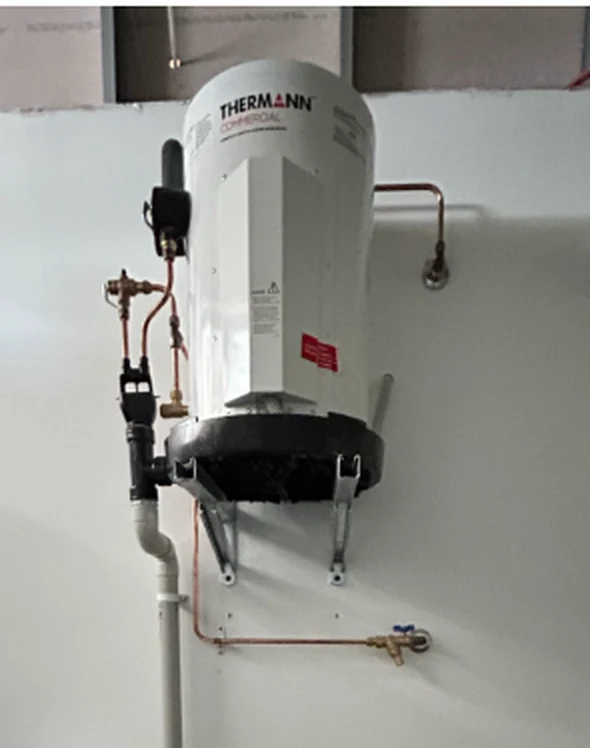
Yes. The solenoid valve on a continuous flow (instantaneous) gas hot water system is particularly vulnerable to water hammer damage. Repeated shockwaves can cause the valve to fail prematurely, resulting in the system not igniting or not shutting off correctly. If your hot water system is making unusual noises or behaving erratically, water hammer may be a contributing factor.
Why has my water hammer suddenly gotten worse?
A sudden increase in water hammer severity usually means something has changed in your system. Common causes include: a new appliance with a faster-closing solenoid valve, a failed or failing PRV that is no longer regulating pressure properly, a depleted air chamber, or a loose pipe bracket that has finally given way. If the problem has noticeably worsened, it is worth having a plumber investigate before it causes damage.
Does water hammer affect my water bill?
Not directly — water hammer is a pressure phenomenon, not a flow issue. However, if water hammer has caused a cracked fitting or a small leak, that leak will show up on your water bill. If your bill has increased at the same time as your water hammer has worsened, it is worth checking for leaks.
Banging Pipes In Gold Coast? Call Creative Coast Plumbing & Gas
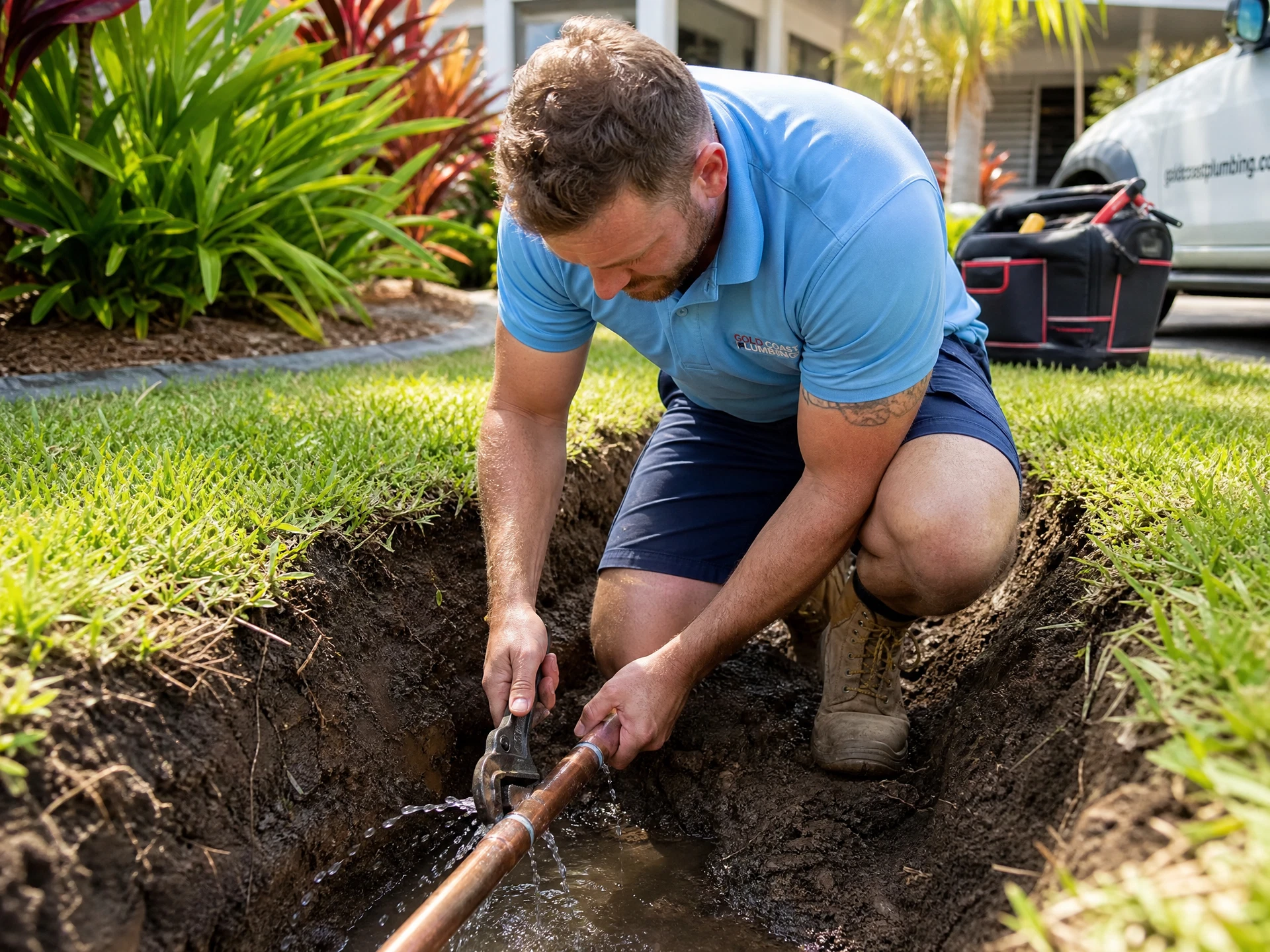
Water hammer is one of those problems that is easy to ignore — until it isn't. If your pipes are banging, rattling or vibrating, the team at Creative Coast Plumbing & Gas can diagnose the cause and fix it properly. We carry PRVs, water hammer arrestors and all the fittings needed to sort most water hammer problems in a single visit.
We are QBCC licensed, based in Labrador, and service the entire Gold Coast from Coomera to Coolangatta. Call Nic on 0485 090 185 for a fixed-price quote — no hourly rates, no surprises.
Sound familiar?
Get It Checked Before It Gets Expensive
Same-day leak detection across the Gold Coast — found, fixed and reported in one visit.